- The Procurement Trap: Saving fractions of a cent on cheap electrical connectors often results in tens of thousands of dollars in unplanned machinery downtime and emergency maintenance.
- Material Degradation: Substandard copper alloys and thin plating layers lead to rapid oxidation, increased contact resistance, and severe thermal runaway risks in high-current applications.
- OEM Warranty Drain: For Original Equipment Manufacturers (OEMs), a field failure caused by a generic connector requires expensive technician dispatch, destroying the profit margin of the initial equipment sale.
- Total Cost of Ownership (TCO): Sourcing premium industrial circular connectors significantly lowers TCO by guaranteeing decades of stable, uninterrupted performance in harsh environments.
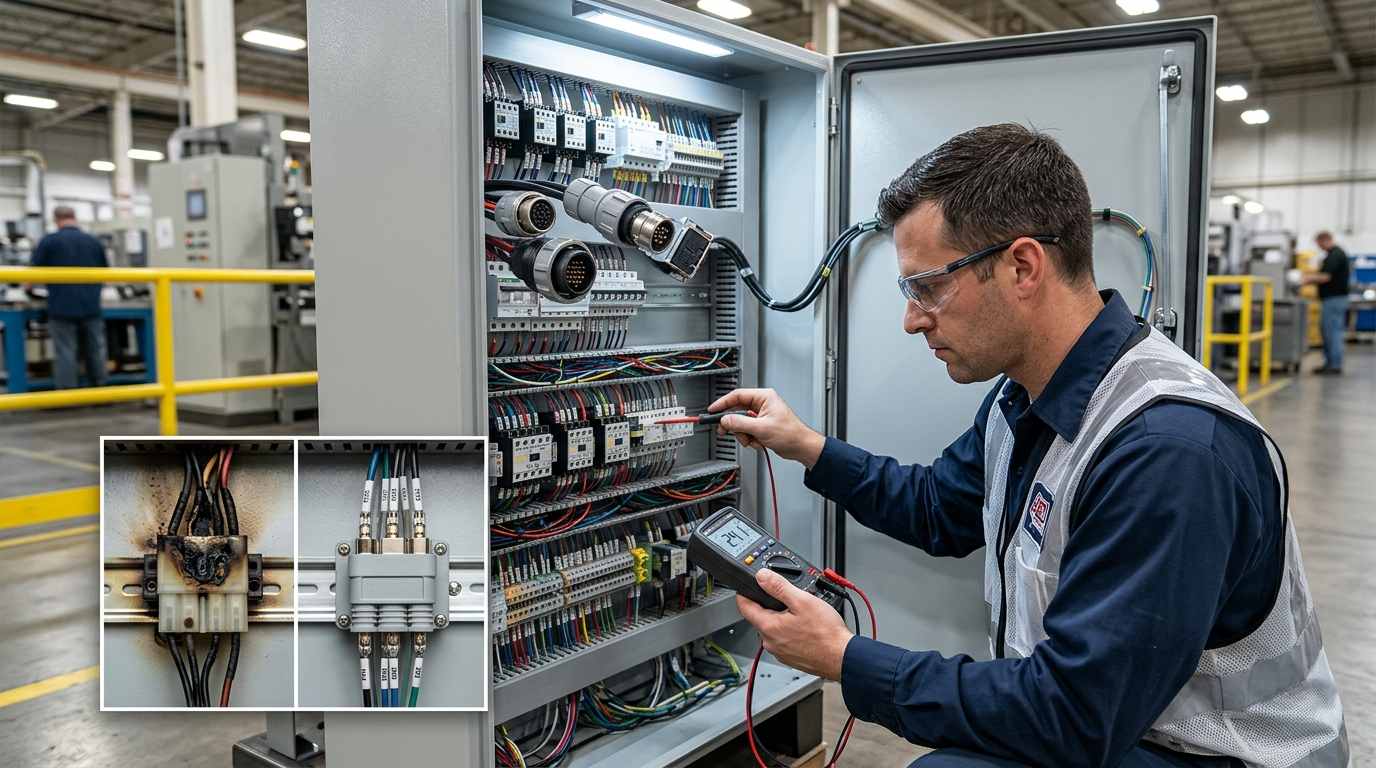
In the complex Bill of Materials (BOM) for heavy industrial machinery, renewable energy infrastructure, or automated robotics, electrical connectors rarely attract the scrutiny they deserve. Representing less than 1% of the total manufacturing cost, they are often treated as highly commoditized afterthought components, leading procurement departments to source the lowest-priced options available. However, this aggressive cost-cutting strategy fundamentally ignores the physical reality of electrical engineering: the connection point is inherently the most vulnerable node in any electrical network.
When an industrial system is deployed into a harsh environment, a failed connector does not simply stop transmitting a signal; it paralyzes the entire operation. The financial ramifications of this paralysis dwarf the initial savings generated by purchasing substandard parts. This comprehensive analysis breaks down the mechanics of connector failure, calculates the true financial impact of unplanned downtime, and explains why strategic sourcing of high-reliability connectivity solutions is a critical business imperative.
1. The Mechanics of Failure: What Happens When Cheap Connectors Degrade?
To understand the financial cost, one must first understand the engineering failure. High-quality connectors are precision instruments engineered with advanced metallurgy and polymer science. Low-quality connectors cut corners in three critical areas: base metals, surface plating, and insulating housings.
Base Metal Fatigue: A connector's socket relies on spring tension to maintain a tight grip on the inserted pin. Premium connectors utilize expensive beryllium copper or phosphor bronze to ensure long-term "elastic memory." Cheap connectors rely on standard brass. Under continuous thermal stress and vibration, brass suffers from rapid stress relaxation. The socket loses its grip, creating microscopic air gaps between the contacts. This instantly increases electrical resistance, leading to localized heating, melting, and eventually, electrical fires.
Deficient Surface Plating: To prevent oxidation, industrial contacts are plated with gold or silver over a nickel barrier. Discount manufacturers frequently apply a "flash" plating—an ultra-thin layer of gold that is merely cosmetic. After only a dozen mating cycles, this thin layer wears off, exposing the reactive base metal to atmospheric oxygen. The resulting oxidation forms an insulating barrier that corrupts sensitive data signals, causing intermittent, incredibly difficult-to-diagnose sensor failures on the factory floor.
Vulnerable Plastics: The housing material must provide dielectric strength and environmental protection. Low-cost connectors often use generic ABS plastics that become brittle under Ultraviolet (UV) radiation or crack during extreme winter temperatures. Once the housing micro-fractures, moisture bypasses the seals, leading directly to catastrophic galvanic corrosion.
2. Calculating the True Cost of Unplanned Downtime
The most immediate and devastating financial consequence of a failed connector is unplanned machinery downtime. In an era of highly optimized, just-in-time manufacturing, an idle production line triggers a cascading financial crisis. According to industry studies on Overall Equipment Effectiveness (OEE), a single minute of downtime in automotive manufacturing or semiconductor fabrication can cost a company between $10,000 and $22,000.
Consider a scenario where an automated packaging line stops because a $2 generic sensor connector has succumbed to vibration-induced fretting corrosion. The direct costs accumulate rapidly: highly paid production workers sit idle, upstream inventory creates a bottleneck, and downstream delivery deadlines are missed, potentially triggering contractual financial penalties from clients.
Furthermore, troubleshooting intermittent electrical issues is notoriously time-consuming. Maintenance technicians may spend hours tracing a lost signal through hundreds of feet of conduit before locating the degraded pin. By replacing cheap interfaces with robust waterproof electrical connectors that feature IP67/IP68 sealing and secure locking mechanisms, facility managers effectively buy an insurance policy against these exorbitant downtime events.
3. The Ripple Effect on OEM Brand Reputation and Warranty Claims
For Original Equipment Manufacturers (OEMs) who design and sell heavy machinery, the hidden cost of poor connectivity extends far beyond the factory floor; it directly erodes their profit margins and damages their brand equity. When a manufacturer sells a $500,000 CNC machine or an industrial solar inverter, it typically comes with a multi-year service warranty.
If an inferior cable assembly fails in the field within the warranty period, the OEM is contractually obligated to fix it. Dispatching a specialized field service technician to a remote client site involves paying for airfare, hotel accommodations, hourly labor rates, and expedited shipping for replacement parts. A single warranty claim caused by a $5 faulty plug can easily cost the OEM upwards of $2,500 in operational expenses, entirely wiping out the profit margin gained from the initial equipment sale.
Worse still is the reputational damage. End-users do not blame the anonymous factory that produced the cheap connector; they blame the OEM whose logo is printed on the machine. Repeated reliability issues caused by electrical faults will inevitably cause major clients to seek out more reliable competitors for their next procurement cycle. To protect brand integrity, top-tier OEMs rely on professionally engineered custom wire harness assemblies that undergo 100% automated continuity and high-voltage testing before leaving the factory.
4. Safety Hazards, Compliance Risks, and Liability
Beyond operational efficiency, poor-quality electrical connections introduce severe safety and legal liabilities. High-current industrial environments (such as battery energy storage systems and heavy motor drives) do not tolerate resistance. As a degraded connector heats up due to thermal runaway, it can easily exceed the melting point of its housing.
If the housing is made of non-compliant, highly flammable plastic, it will ignite, potentially causing a catastrophic facility fire. This is why international regulatory bodies require stringent UL94-V0 flame retardancy ratings for electrical housings. Utilizing generic components that lack verified UL, CE, or RoHS certifications not only exposes workers to extreme shock and fire hazards but also places the operating company at immense legal risk. In the event of an industrial accident, insurance investigators will scrutinize the electrical infrastructure; the discovery of non-compliant, uncertified components can result in voided insurance payouts and heavy regulatory fines.
Total Cost of Ownership (TCO): Premium vs. Low-Cost Connectors
| Cost Category | Low-Cost Generic Connectors | Premium Industrial Connectors |
|---|---|---|
| Initial Purchase Price | Very Low (Appears highly cost-effective on BOM). | Moderate to High (Reflects advanced engineering and materials). |
| Unplanned Downtime | High probability; failures cost thousands of dollars per hour. | Extremely low probability; designed for decades of 24/7 uptime. |
| Maintenance & Warranty | Frequent field repairs; heavy drain on OEM service budgets. | "Install and forget" reliability; zero emergency dispatch costs. |
| Safety & Compliance | Unverified plastics; severe risk of thermal runaway and fire. | UL/CE Certified; IP68 sealed; guaranteed flame retardance. |
| Actual TCO | Exorbitant (Hidden operational losses). | Highly Economical (Prevents operational losses). |
Frequently Asked Questions (FAQ)
How much does equipment downtime caused by connector failure cost?
The cost varies by industry, but in high-volume manufacturing, a single minute of unplanned downtime caused by a failed connector can cost between $10,000 and $22,000 in lost production, idle labor, and expedited repair logistics.
Why do cheap industrial connectors fail faster than premium ones?
Cheap connectors fail prematurely because they use inferior base metals that suffer from stress relaxation, extremely thin plating layers that wear off after a few mating cycles, and low-grade plastics that crack under thermal shock and UV exposure.
How can OEMs prevent high warranty costs associated with faulty wiring?
OEMs can prevent exorbitant warranty and maintenance costs by sourcing components from certified manufacturers that perform Accelerated Life Testing (ALT), utilizing IP67/IP68 rated enclosures, and specifying custom wire harnesses that undergo 100% automated continuity testing.
True engineering excellence requires looking past the initial purchase price to guarantee long-term operational success. At Xiamen Olink, we protect your brand and your bottom line by manufacturing world-class industrial connectors, heavy-duty wire harnesses, and IP68 waterproof solutions that eliminate field failures. Partner with our ISO-certified factory today to secure the most reliable connectivity infrastructure for your critical equipment.