- Managing Massive Power: As Battery Energy Storage Systems (BESS) scale up, specialized high current connectors are strictly required to safely transmit 100A to 300A+ of continuous direct current (DC) without catastrophic overheating.
- Thermal Superiority: Utilizing thick silver plating and advanced multi-point contact springs ensures ultra-low contact resistance, directly minimizing heat generation during heavy charge and discharge cycles.
- Operator Safety: High-voltage battery banks demand connectors with touch-proof (IP2X) finger-safe designs, mechanical color-coding to prevent cross-wiring, and UL94-V0 flame-retardant thermoplastics.
- Outdoor Reliability: For grid-scale installations, energy storage interfaces must feature IP67/IP68 sealing to protect critical power linkages from rain, dust, and galvanic corrosion.
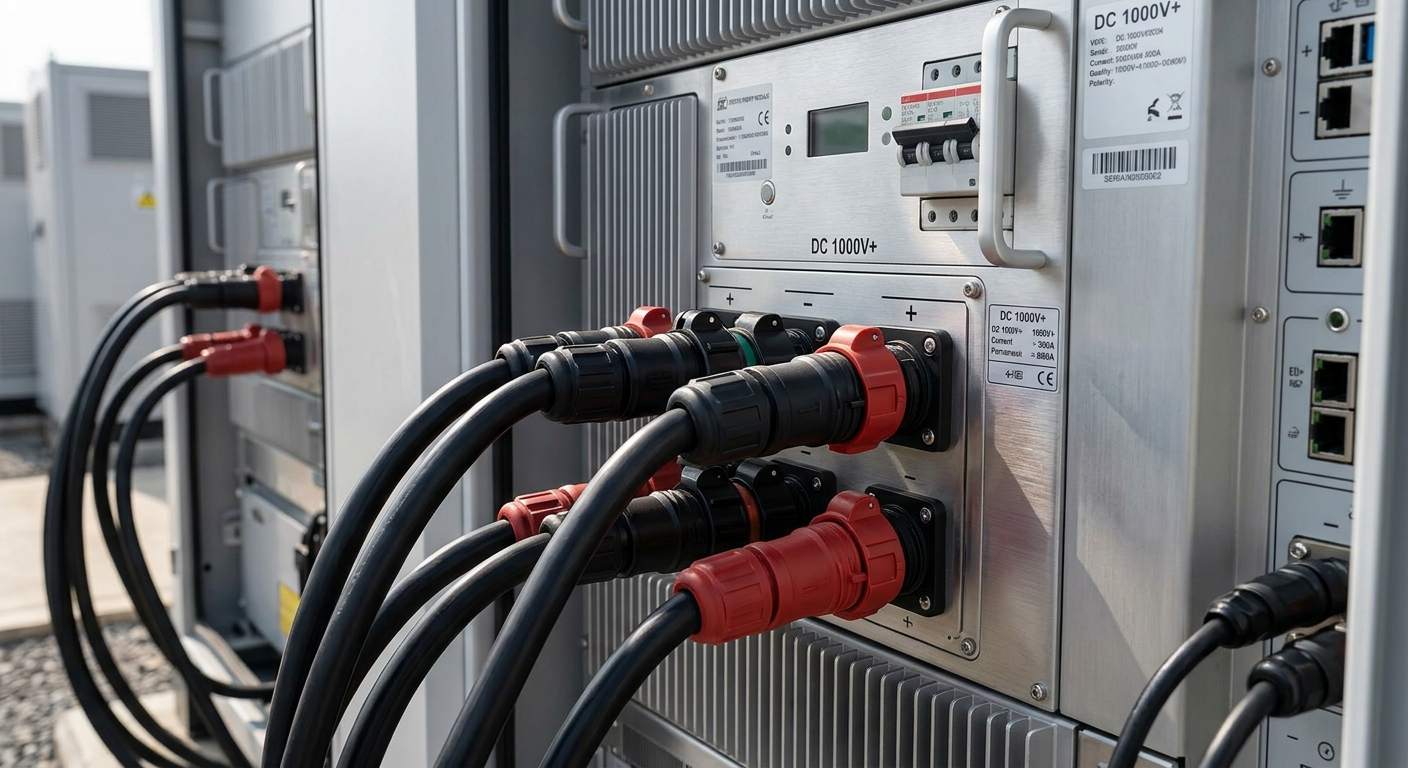
The global push toward renewable energy has catapulted Battery Energy Storage Systems (BESS) to the forefront of power infrastructure. Whether storing solar energy for residential homes or acting as massive grid-stabilizing utility plants, these battery banks are the beating heart of the modern power grid. However, stringing together hundreds of lithium-ion cells generates intense voltages and massive amperages. Standard industrial wiring simply cannot handle this load. To ensure grid stability, prevent thermal runaway, and protect maintenance personnel, engineers are strictly adopting specialized high current connector technologies. Here is why these heavy-duty interfaces have become absolutely essential for the energy storage sector.
1. Mastering Thermal Management and Contact Resistance
When transmitting 100A, 200A, or even 350A of continuous DC power, even a fraction of a milliohm in contact resistance translates to significant heat generation. In a tightly packed battery cabinet, excess heat is dangerous—it accelerates battery degradation and can trigger catastrophic thermal runaway.
To combat this, a premium energy storage connector relies on advanced metallurgy. Instead of standard brass, they utilize high-conductivity copper alloys paired with heavy silver plating. Silver offers the highest electrical and thermal conductivity of any metal, allowing the connector to dissipate heat rapidly. Furthermore, internal leaf springs or multi-tine crown contacts are used to maximize the microscopic surface area between the male pin and female socket, keeping resistance as close to zero as physically possible.
2. Prioritizing Operator Safety with Touch-Proof Designs
Modern BESS architectures frequently operate between 1000V and 1500V DC. At these voltage levels, accidental human contact with a live terminal is instantly fatal. Standard ring terminals and bare busbars are being aggressively phased out of modern battery racks for this exact reason.
High current battery connectors feature an IP2X "finger-safe" design. The metal contact pins are deeply recessed within heavy-duty thermoplastic housings, making it impossible for an operator’s finger to touch a live circuit even when the connector is unmated. Additionally, these housings are molded from UL94-V0 rated flame-retardant materials and utilize mechanical keying and color-coding (e.g., orange for positive, black for negative) to make reverse-polarity miswiring impossible during rapid field installations.
3. Environmental Sealing for Outdoor Containerized BESS
Utility-scale battery storage is typically housed in massive outdoor shipping containers. While the containers provide basic shelter, the external power linkages and communication lines are exposed to extreme humidity, salt fog, and driving rain.
If moisture penetrates a 1500V DC connection, it will cause violent electrical arcing. For any power interface bridging the outside of the battery container, a specialized waterproof connector rated to IP67 or IP68 is mandatory. These connectors use thick silicone compression seals and ultrasonic welding to ensure that the power transmission remains completely isolated from environmental contaminants throughout its 25-year operational lifespan.
Traditional Lugs vs. High Current Energy Storage Connectors
| Feature | Traditional Ring Lugs / Busbars | Modern High Current Connectors |
|---|---|---|
| Installation Speed | Slow; requires tools and precise torque wrenching. | Fast; tool-free plug-and-play insertion. |
| Operator Safety | Low; exposed metal poses severe high-voltage shock risks. | High; IP2X finger-safe and fully insulated housings. |
| Miswiring Prevention | None; relies entirely on human attention. | Mechanical keying and color-coding prevent reverse polarity. |
| Thermal Reliability | Vulnerable to loosening over time, leading to thermal runaway. | Constant spring tension ensures stable, low-resistance contact forever. |
Frequently Asked Questions (FAQ)
Why do battery energy storage systems require specialized connectors?
Battery Energy Storage Systems (BESS) handle massive continuous DC power and high surge currents. Specialized connectors are required to prevent overheating, minimize power loss through low contact resistance, and ensure safety against high-voltage electrical arcs.
How do high current connectors prevent overheating in battery packs?
They utilize high-conductivity copper alloys, thick silver plating, and multi-point contact spring designs to maintain ultra-low contact resistance, which drastically reduces Joule heating under heavy electrical loads.
What safety features are built into modern energy storage connectors?
Modern energy storage connectors incorporate touch-proof (finger-safe) designs to protect operators from electric shock, UL94-V0 flame-retardant housings to prevent fire spread, and positive mechanical locking to prevent accidental uncoupling during operation.
As renewable energy infrastructure expands, building safe and efficient power networks is critical. Xiamen Olink specializes in the manufacturing of heavy-duty battery connectors, IP67 waterproof interfaces, and high-voltage wire harnesses engineered specifically for BESS and electric mobility. Connect with our technical team today to source reliable power transmission solutions for your next energy storage project.