- Electrical Baseline: Accurate calculation of continuous current, peak voltage, and thermal derating is the foundation of safe connector selection.
- Environmental Defense: Industrial environments require evaluating ingress protection (IP65/IP67/IP68), UV resistance, and chemical exposure before selecting housing materials.
- Mechanical Locking: Applications with heavy vibrations—such as robotics and rail transit—demand secure locking mechanisms like threaded couplings or push-pull latches to prevent accidental disconnection.
- Form Factor Selection: Choosing the right style, whether it is a circular heavy-duty connector for machinery or a compact DIN rail terminal block for control cabinets, streamlines installation and maintenance.
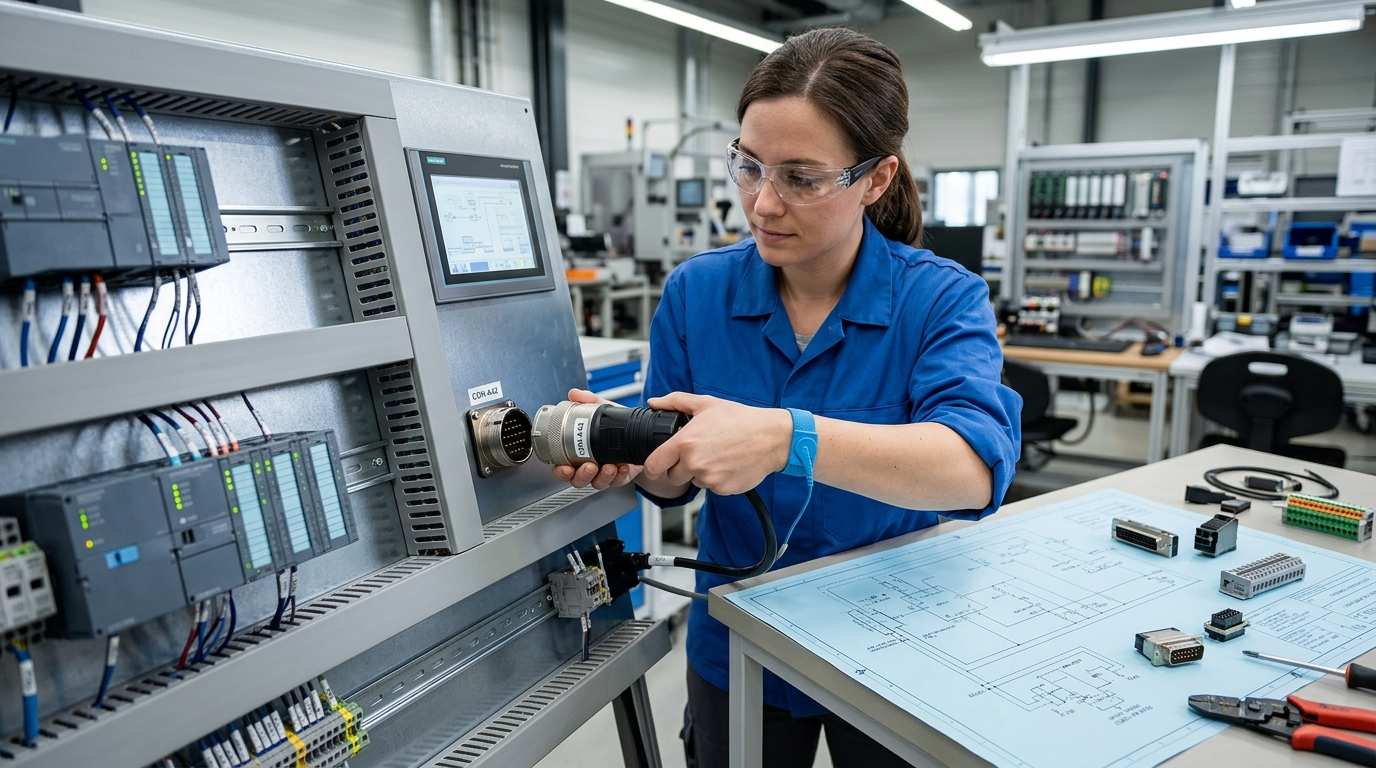
Selecting the correct electrical connector for an industrial application is not a minor procurement detail; it is a mission-critical engineering decision. In factory automation, heavy manufacturing, and power distribution systems, a single point of failure at the connection interface can lead to severe safety hazards, costly production downtime, and extensive equipment damage. Navigating the thousands of connector variants on the market can be overwhelming. This comprehensive guide provides system architects, electrical engineers, and buyers with a step-by-step engineering framework for choosing the exact right connector for any harsh industrial environment.
1. Define the Electrical Specifications and Derating
Every connector selection process must begin with a rigorous analysis of the electrical load. You must determine not only the continuous operating current and voltage but also the potential peak surge demands during motor startups or system faults.
It is vital to apply a thermal derating curve. As the ambient temperature in an industrial facility rises, the current-carrying capacity of the connector decreases. A rule of thumb for high-power industrial applications is to select a connector with an amperage rating 20% to 30% higher than your maximum calculated continuous load. This safety margin prevents Joule heating, ensures low contact resistance, and extends the lifespan of the terminal plating.
2. Assess Environmental Hazards (IP Rating and Materials)
Industrial environments expose components to airborne dust, water splash, oil spray, and corrosive chemicals. Evaluating the Ingress Protection (IP) rating is non-negotiable. For indoor control panels, a standard enclosure might suffice, but for external machinery connections, you need guaranteed sealing. Partnering with an expert waterproof connector manufacturer ensures that your IP67 or IP68 connections use high-elasticity silicone O-rings that will not degrade under thermal shock.
Furthermore, consider the housing material. Standard commercial ABS plastic will crack under UV exposure or chemical washdowns. For harsh settings, specify housing made from die-cast zinc, anodized aluminum, or high-performance thermoplastics like PA66 (Nylon) which offer superior impact and chemical resistance.
3. Mechanical Stress and Locking Mechanisms
Industrial equipment is rarely stationary. Machinery engines, rail transit systems, and robotic arms generate continuous harmonic vibration and sudden physical shocks. A basic friction-fit connection will eventually vibrate loose, causing intermittent signal loss or severe arcing.
For these dynamic environments, engineers must specify robust mechanical retention. Heavy-duty industrial circular connectors frequently employ threaded couplings, bayonet locks, or push-pull self-latching mechanisms. These designs provide tactile feedback upon mating and ensure that the connection cannot be physically broken without deliberate mechanical disengagement by an operator.
4. Select the Right Form Factor and Termination Style
The physical layout of your system dictates the connector's form factor. For dense internal control cabinets where space and neat wiring are paramount, DIN-rail mounted electrical terminal blocks are the industry standard, allowing for organized power distribution and rapid troubleshooting.
Additionally, consider how the wire is terminated to the contact pin. While traditional soldering is reliable, it is slow and requires skilled labor. Modern industrial connectors increasingly favor automated crimping or tool-free push-in spring terminals. These methods dramatically accelerate field installation time while eliminating the human error associated with improper screw torquing.
Industrial Connector Selection Matrix
| Requirement Category | Key Engineering Metric | Application Example |
|---|---|---|
| Power & Voltage | Max Amperage (A), Dielectric Withstand (V), Derating. | High-current battery banks, Servo motor power supplies. |
| Environmental Sealing | IP65 (Dust/Splash) vs. IP68 (Continuous Submersion). | Outdoor solar PV arrays, Marine electronics. |
| Vibration & Locking | Mating Cycles, Threaded vs. Push-Pull Locking. | Robotic arms, Railway transit cars, Heavy mining vehicles. |
| Material & Plating | Gold (Data) vs. Silver (Power), PA66 vs. Zinc Alloy Housing. | Precision medical devices, Chemical processing plants. |
Frequently Asked Questions (FAQ)
How do I calculate the current rating needed for an industrial connector?
You must calculate both the continuous operating current and the peak surge current. Engineers should also apply a thermal derating curve, typically selecting a connector rated 20% to 30% higher than the maximum continuous load to prevent overheating.
What is the difference between gold and silver plating in electrical connectors?
Gold plating provides exceptional resistance against oxidation and fretting corrosion, making it ideal for low-voltage sensor data. Silver plating offers superior thermal and electrical conductivity, making it the standard choice for high-current power transmission.
How do I select the right IP rating for an industrial connector?
For indoor factory environments with light dust, IP65 is usually sufficient. For outdoor applications exposed to heavy rain, choose IP67. If the connector will be continuously submerged in water or placed in underground trenches, an IP68 rating is strictly required.
Engineering a resilient industrial system requires partnering with a trusted connectivity expert. At Xiamen Olink, we design and manufacture a comprehensive portfolio of reliable circular metal connectors, precision terminal blocks, and custom wire harness solutions. Supported by strict ISO9001 and UL certifications, our technical team is ready to help you select the perfect connector for your most demanding applications. Contact us today to discuss your engineering needs.