How Welding Machine Capacitors Improve Arc Stability and Equipment Lifespan
Introduction
In modern welding systems, stable arc performance is essential for precision, safety, and efficiency. While many users focus on power sources and control systems, one critical component is often overlooked — the welding machine capacitor.
A properly selected welding capacitor can:
-
Stabilize arc ignition
-
Reduce current fluctuation
-
Improve welding consistency
-
Extend machine lifespan
In this article, we explain how welding capacitors work and why they are vital in today’s industrial welding equipment.
What is a Welding Machine Capacitor?
A welding machine capacitor is a metallized polypropylene film capacitor designed to operate under:
-
High current pulses
-
Frequent voltage fluctuations
-
High-temperature environments
It is mainly used for:
✔ Arc stabilization
✔ Voltage buffering
✔ EMI suppression
✔ Power factor improvement
Typical applications include:
-
Inverter welding machines
-
ARC welders
-
TIG / MIG systems
-
Industrial welding power supplies
Why Capacitors Matter in Welding Machine
Without a reliable capacitor, welding machines may suffer from:
-
Unstable arc
-
Spatter issues
-
Equipment overheating
-
Shortened service life
High-quality film capacitors help:
✔ Maintain consistent arc ignition
✔ Smooth output waveform
✔ Reduce stress on IGBT modules
✔ Improve overall efficiency
This is especially important in inverter welding machines operating at high switching frequencies.
Key Performance Features
Modern welding capacitors are engineered for harsh environments.
Important characteristics include:
| Feature | Benefit |
|---|---|
| Low ESR | Reduced heat generation |
| High ripple current resistance | Stable operation |
| Self-healing film | Longer lifespan |
| High voltage tolerance | Safety in surge conditions |
| Compact structure | Easy integration |
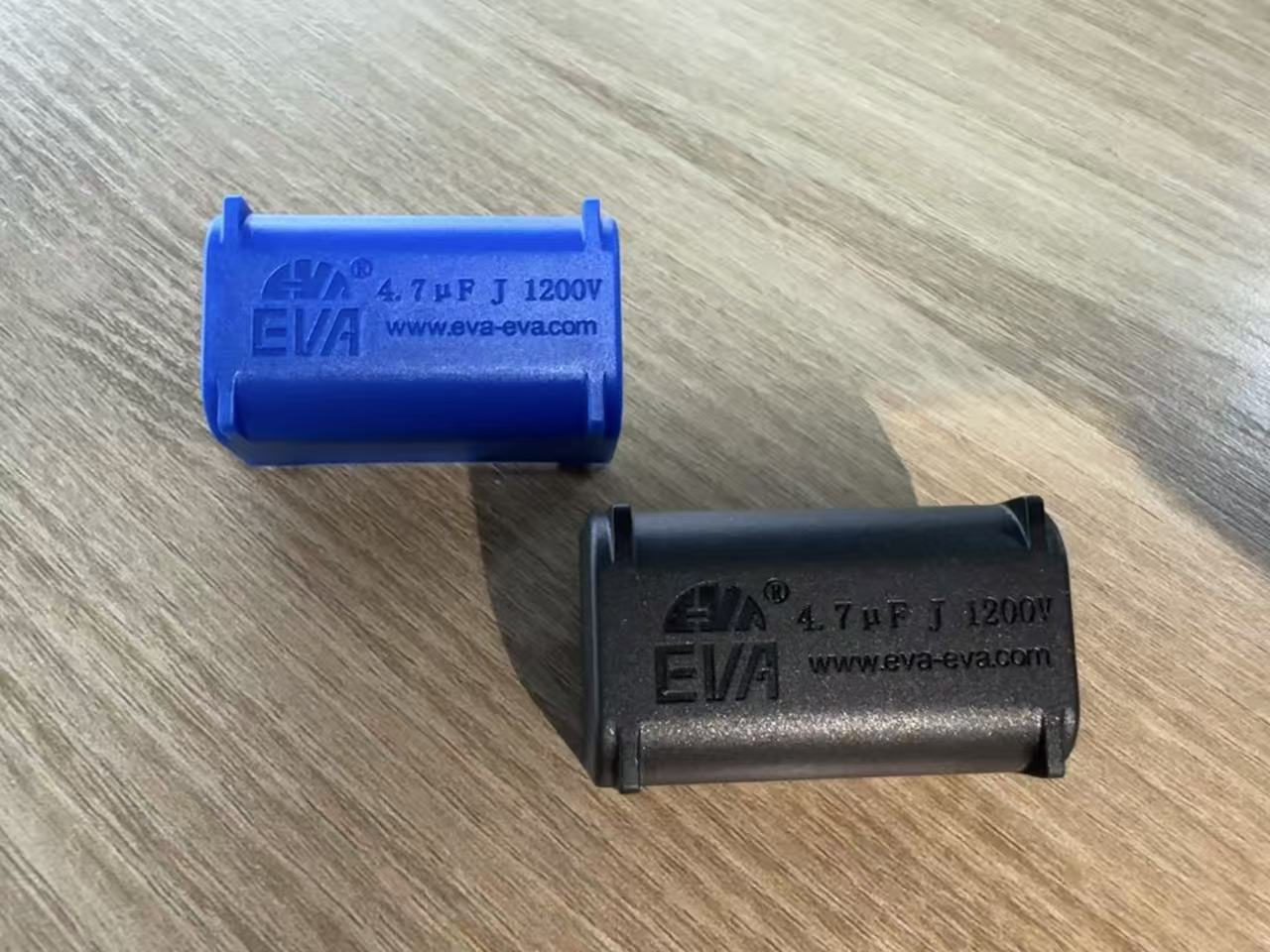
For example, 4.7µF welding capacitors are widely used in inverter welding circuits for energy buffering and voltage stabilization.
Application Advantages
Using a reliable welding capacitor brings:
✔ Better arc control
✔ Lower failure rate
✔ Reduced maintenance
✔ Improved welding precision
In heavy-duty industrial environments, this directly translates into:
→ Higher productivity
→ Reduced downtime
→ Lower equipment replacement cost
Choosing the Right Welding Capacitor
When selecting a welding machine capacitor, consider:
-
Capacitance value
-
Rated voltage
-
Operating temperature
-
Ripple current capability
-
Application frequency
For inverter welding machines, metallized polypropylene capacitors are the preferred solution due to their durability and self-healing properties.
Conclusion
As welding technology evolves, component reliability becomes increasingly important. A high-quality welding machine capacitor is not just an accessory — it is a core element that ensures stable operation and long-term equipment performance.
Whether used in inverter welders or industrial ARC systems, selecting the right capacitor can significantly improve welding stability and extend machine life.
Looking for reliable welding machine capacitors?
Our engineering team can help you select the right solution for your application.
Contact us today for technical support or samples.
